Construction Site Security Cameras in Texas: What Actually Stops Theft.
- Home
- /
- Construction Site Security Cameras in Texas: What Actually Stops Theft.
The 3 A.M. Problem Every Site Manager Knows.
3 a.m. Nobody’s on site. Nobody’s watching the yard. That’s exactly when your generator, your copper, or your skid steer decides to grow legs. You’ve felt this before. Maybe not at 3 a.m. specifically, but you know the feeling of pulling into a job site Monday morning and doing a slow, sinking headcount of what’s missing. A fence didn’t stop it. A “No Trespassing” sign definitely didn’t stop it. And by the time anyone noticed, whoever took it was three counties away. That’s not bad luck. That’s a predictable outcome of leaving a valuable site unwatched.
Why Texas Job Sites Are Different
Texas isn’t just bigger than other states, it’s building faster than almost anywhere else in the country, and that changes the math on job site security.
In a slower-growth market, a contractor might run one or two active sites at a time, with enough crew and enough eyes around to notice when something’s off. That’s not the reality in Texas right now. Dallas-Fort Worth is adding warehouses and data centers along its major corridors faster than crews can staff them. Houston’s port and petrochemical work stretches out along miles of exposed pipeline right-of-way. Austin’s chip plants and data centers are running on schedules tight enough that a single delay becomes a conversation with ownership. San Antonio’s industrial parks are expanding onto open land that often has no existing security infrastructure at all.
Put simply: more active sites, spread across more square miles, means more places for something to go wrong unnoticed. And theft doesn’t wait for convenient timing. It happens at 3 a.m., on a Friday night, during a three-day weekend, whenever the site is quietest and least likely to have anyone around to see it.
The Real Numbers Behind Job Site Theft
This isn’t a scare tactic, it’s a documented problem. Construction equipment theft costs the industry an estimated $300 million to $1 billion a year nationwide, and recovery rates hover around just 20%. That means for every five pieces of equipment stolen off a job site, only one is likely to come back.
Once something’s gone, the cost isn’t just the replacement price tag. It’s the insurance claim that takes weeks to process. It’s the rental equipment you now need while you wait. It’s the schedule slip that turns into a hard conversation with a GC or an owner about why the project is behind. On a large-scale Texas build, especially anything tied to a hard deadline like a data center opening or a pipeline tie-in date, that kind of delay can ripple through the entire project timeline.
Why Traditional Security Falls Short
A fence and a “No Trespassing” sign are not a security plan, they’re a suggestion. Static cameras aren’t much better if nobody’s actually watching the footage in real time; at that point, you’re not preventing theft, you’re just documenting it after the fact for an insurance claim.
The sites that actually stay protected share a few things in common: active, monitored coverage rather than passive recording, equipment built to survive real field conditions rather than a residential camera duct-taped to a fence post, and a response plan for when something suspicious actually happens rather than a login nobody checks.
Mobile Camera Trailers: Coverage That Moves With the Job
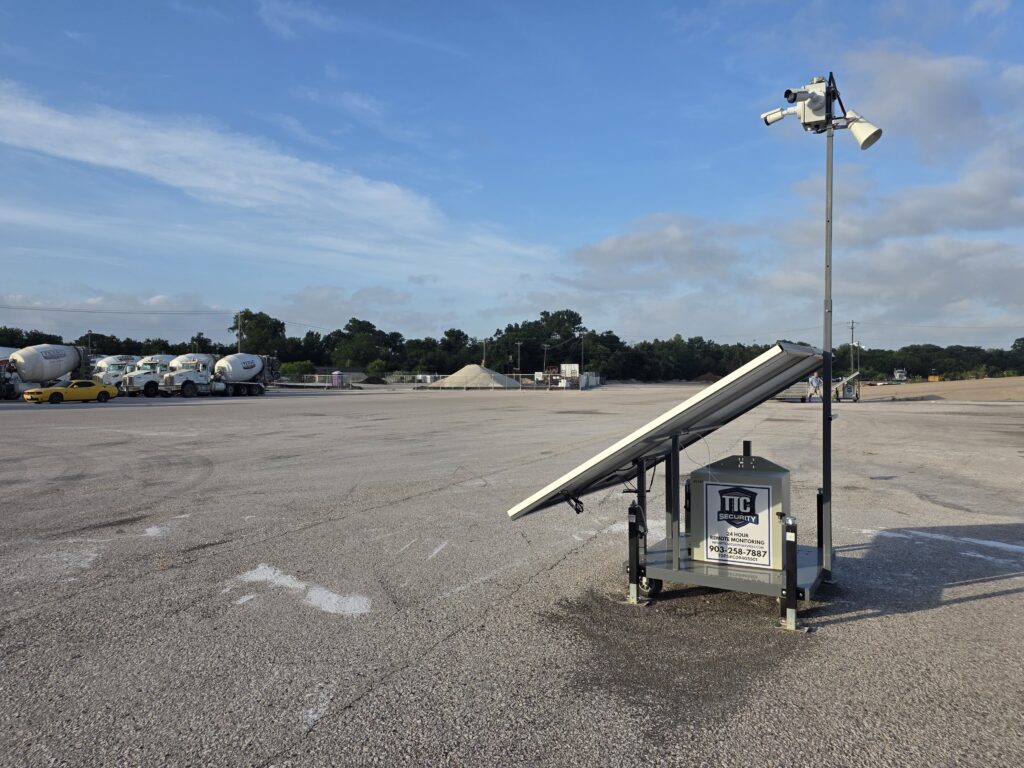
Solar-powered mobile camera trailers are the backbone of a real job site security plan. No permanent power hookup, no internet installation, no waiting on a utility crew, just a trailer that rolls in, sets up, and starts watching. As the site evolves, from groundbreaking to final walkthrough, the coverage moves with it instead of staying fixed on whatever the site looked like on day one.
That flexibility matters more in Texas than almost anywhere else, since so many active sites here are large enough that “the job site” on day 30 looks nothing like it did on day one.
Drone Patrols: Coverage Ground Cameras Can’t Touch
Here’s the thing about ground cameras, they’re excellent at watching a fixed spot, and completely blind to everything outside their frame. On a pipeline right-of-way running for miles, or a heavy civil site spread across open acreage, that’s a problem no number of extra trailers fully solves. You’d need dozens of them, and even then, gaps remain.
Drones close that gap by covering ground a trailer physically can’t. An aerial sweep can check a fence line, a remote storage yard, or a section of pipeline corridor in minutes, and repeat that sweep on a schedule throughout the night. Add thermal and night-vision capability, and a drone can pick up a body or a vehicle moving through a completely dark field long before headlights ever reach the property line.
For pipeline operators and oilfield sites in particular, where “the site” might stretch across hundreds of acres with no realistic way to fence the whole perimeter, that aerial layer isn’t a nice-to-have. It’s often the only way to actually see the whole property at once.
Ground cameras and drones aren’t competing tools, they’re complementary ones. One watches what’s in front of it continuously. The other checks everywhere else. A site with both has a security posture a site with just one never will.
What to Look for When Choosing a Security Company
Not every “security camera company” is actually offering security. A lot of them are offering a camera, a login, and a shrug. Before signing anything, a few questions are worth asking:
Is someone actually monitoring the footage, or just recording it? A camera nobody’s watching in real time only helps after the fact, when the equipment’s already gone.
Is the company licensed to operate in this space? In Texas, that means holding an actual TDPS license, not just a business license and a website.
Does the team understand what suspicious activity actually looks like? There’s a real difference between a monitoring center that’s watching for obvious break-ins and one staffed by people with actual law enforcement background, who know what to flag before it escalates.
Can you test it before committing? A company confident in its own coverage should have no problem letting a contractor see it work on their actual site before signing a long-term contract.
None of this is complicated. It’s just easy to overlook when a sales pitch is doing all the talking.
The Bottom Line for Texas Contractors
If your site sits unmonitored overnight, on weekends, or during any stretch of downtime, you’re not avoiding a problem, you’re just waiting for it. The fix doesn’t require permanent infrastructure, a huge upfront investment, or months of setup, it requires deploying the right coverage, ground cameras and drone patrols working together, before the theft happens instead of after someone’s filed a police report.
That’s true whether your project is in Dallas-Fort Worth, Houston, Austin, San Antonio, or anywhere in between. Below, here’s exactly what that coverage looks like, and how fast it can be up and running on your site.

Mobile Security Camera Trailers: Built for Texas Job Sites
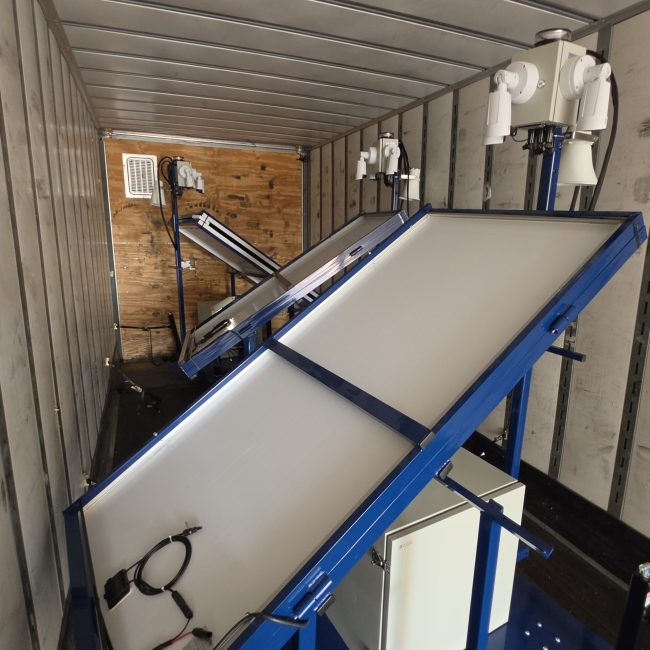
This is one of our mobile surveillance trailers, folded down and ready for transport. Solar panels, camera mast, and monitoring hardware all built into one unit that deploys to your site with no permanent power or internet required.
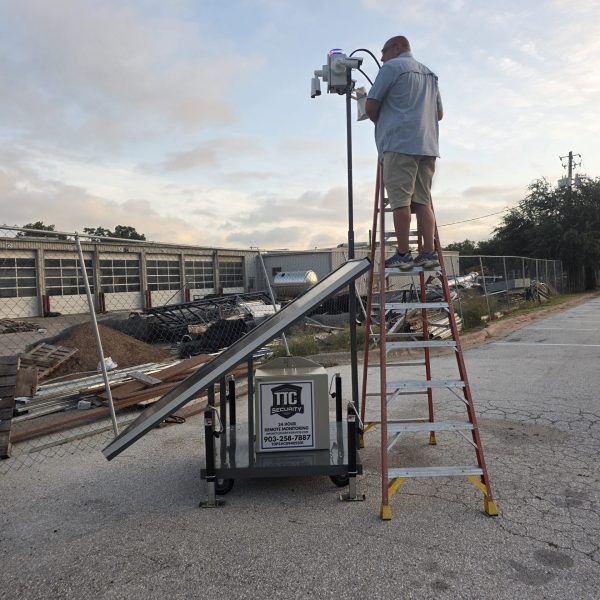
Each trailer runs on solar power alone, so there’s no generator to refuel and no extension cord running across an active work zone. The camera mast extends once on-site, giving a clear vantage point over equipment yards, entrances, or laydown areas, and the whole unit tows behind a standard pickup, so relocating it as the site changes takes minutes, not a crew.’
Every unit is built for real field conditions, heat, dust, remote sites, not showroom conditions. See the full specs and coverage options on our mobile and remote camera systems page.

Dallas-Fort Worth: Booming Corridors, Bigger Targets
DFW isn’t just growing, it’s sprawling. Data centers, distribution warehouses, and residential developments are stacking up along I-35 and 121 faster than crews can staff them. The numbers back this up: Dallas-Fort Worth recently overtook Northern Virginia as the world’s top data center market, with over 3,200 megawatts of new capacity currently under construction, and DFW led the entire country in industrial space under development at the start of 2026, with nearly 29 million square feet underway. That means more equipment yards, more overnight laydown areas, and more sites sitting quiet between shifts.
A logistics build in Mesquite has completely different risk than a mixed-use tower downtown, but they share one thing: nobody’s watching either one after the crew clocks out. That’s where mobile coverage earns its keep.
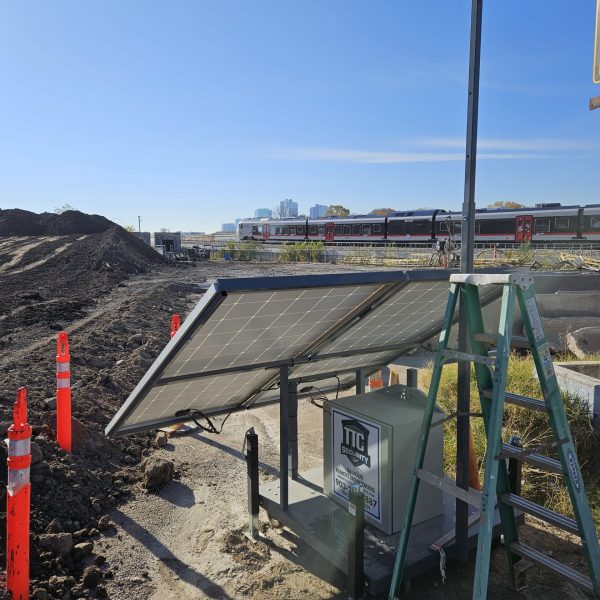
Houston: Ports, Pipelines, and a Lot to Lose
Houston runs on industrial scale. Port expansion, petrochemical builds, and pipeline work along the Gulf Coast corridor mean job sites that are bigger, more remote, and harder to patrol on foot. Port Houston’s Project 11 alone is a $1.6 billion channel-widening effort currently under construction, and across the broader petrochemical corridor, an estimated $50 billion in active capital projects, including Chevron Phillips Chemical’s $8.5 billion Cedar Bayou expansion, are absorbing thousands of construction workers right now. A pipeline right-of-way doesn’t have a front gate. It has miles of exposure.
Add in the heat, the humidity, and equipment that has to survive both, and you need a system built for field conditions, not a residential camera zip-tied to a fence post. On a project moving at Houston’s pace, with this much capital and this many moving pieces, a security gap isn’t a small risk, it’s one more variable in an already complicated build.
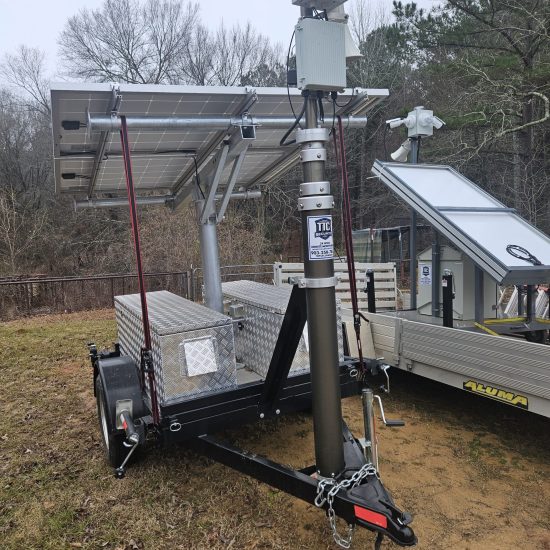
Austin: Chip Plants, Data Centers, and Tight Timelines
Austin’s construction boom isn’t slowing down. Semiconductor fabs, data centers, and a residential market that never seems to catch its breath all mean high-value builds with aggressive schedules. Samsung’s massive Taylor campus alone represents a multi-billion dollar investment, and it’s just one piece of a broader wave of chip and data center construction reshaping the corridor between Austin and Williamson County. One theft-related delay on a project this size isn’t a minor setback. It’s a line item your GC has to explain upward, and on a build with international investors watching the timeline, that conversation gets a lot less comfortable.
Fast-growing sites need security that can deploy just as fast. A semiconductor fab site doesn’t sit still waiting for a security plan to catch up, it moves through phases quickly, with different areas becoming active, then dormant, then active again as construction progresses. Mobile units go in before the theft happens, not after someone’s already filed a police report, and they can relocate as the site’s actual risk areas shift.”
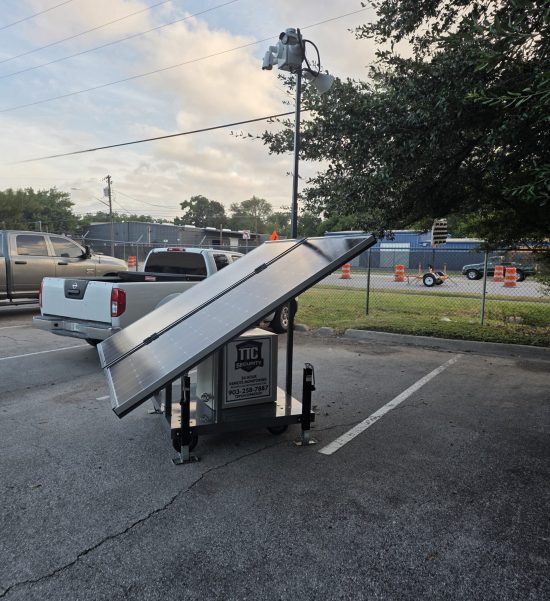
San Antonio: Growth Zones and Wide-Open Yards
San Antonio’s industrial parks and medical infrastructure projects are expanding fast, and a lot of that growth sits on wide-open land with minimal existing security infrastructure. The South Texas Medical Center corridor keeps growing, industrial parks near Port San Antonio keep leasing out new space, and none of it comes with a security plan built in. Big open yards look great on a site plan. They look even better to someone scouting for an easy night.
Add in San Antonio’s proximity to the Eagle Ford Shale corridor, and you’ve got contractors managing job sites that range from a hospital wing expansion downtown to an oilfield support yard an hour outside the city, often with the same small crew stretched across both. Whether it’s a hospital expansion, an industrial park build-out, or a support site for oilfield operations, the exposure is the same: lots of ground, not enough eyes on it, and not enough hours in the day to watch it all in person.
Why Texas Contractors Choose TTC

Stop Theft Before It Starts
Visible systems act as a strong deterrent on job sites while allowing you to monitor activity and respond quickly when needed.

Monitor From Anywhere, Anytime
Check in on your job site from your phone, tablet, or computer, live and recorded footage available around the clock.

Rapid Statewide Deployment
We deliver and install quickly across Texas, so your site is protected without delays.

Keep Projects On Schedule
Keep your project on schedule and on budget by avoiding disruptions from theft or unauthorized site access.
Built for the Field, Ready Statewide
Texas job sites don’t play nice, dust, heat, remote acreage, and the occasional wandering armadillo. Our construction site security cameras are built to handle all of it, from Panhandle pipeline corridors to downtown high-rises.
WHAT'S INCLUDED
- Solar trailers that never take a break
- 4K cameras clear enough to read a plate
- Night vision that turns pitch black into plain sight
- Check your site from your couch, phone in hand
- AI alerts that never clock out, day or night
WHO WE PROTECT IN TEXAS
- Commercial builds of every size
- Infrastructure that keeps Texas running
- DOT and roadwork sites
- Retail builds mid-construction
- Pipeline corridors and oilfield sites
The Credentials Behind the Cameras

Three decades in law enforcement, not just tech

Fully licensed, fully insured, no gray areas

Camera hardware that's Tier 1 certified, not off-brand
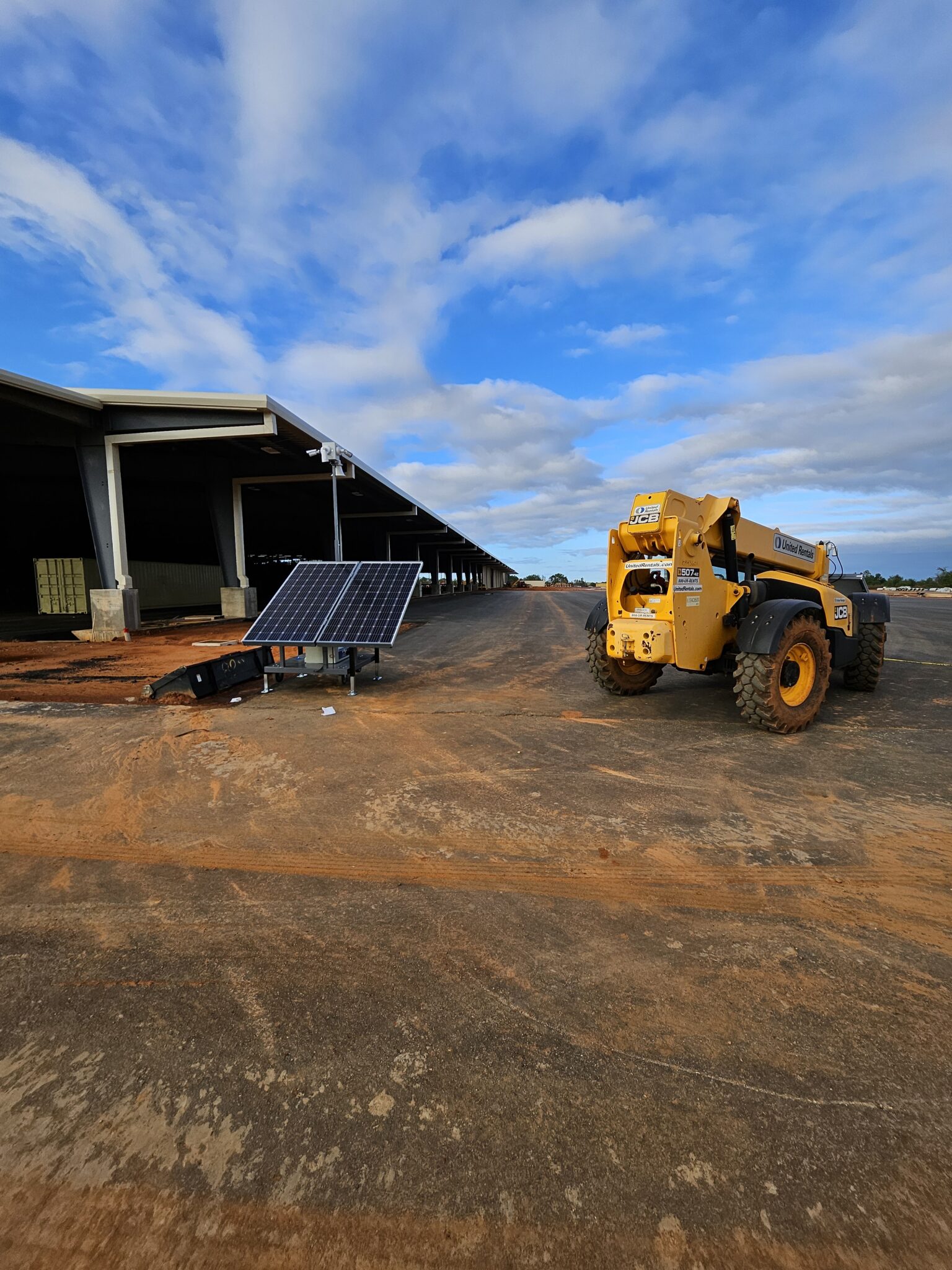

We show up, we install, and the protection starts immediately

Two weeks to test it before you commit a dime

Made for dirt, dust, and long hours
Years on real job sites across Dallas, Houston, Austin, and San Antonio taught us what actually stops theft before it happens.
How Commercial Security Camera Installation Works

'We Walk the Site First
01
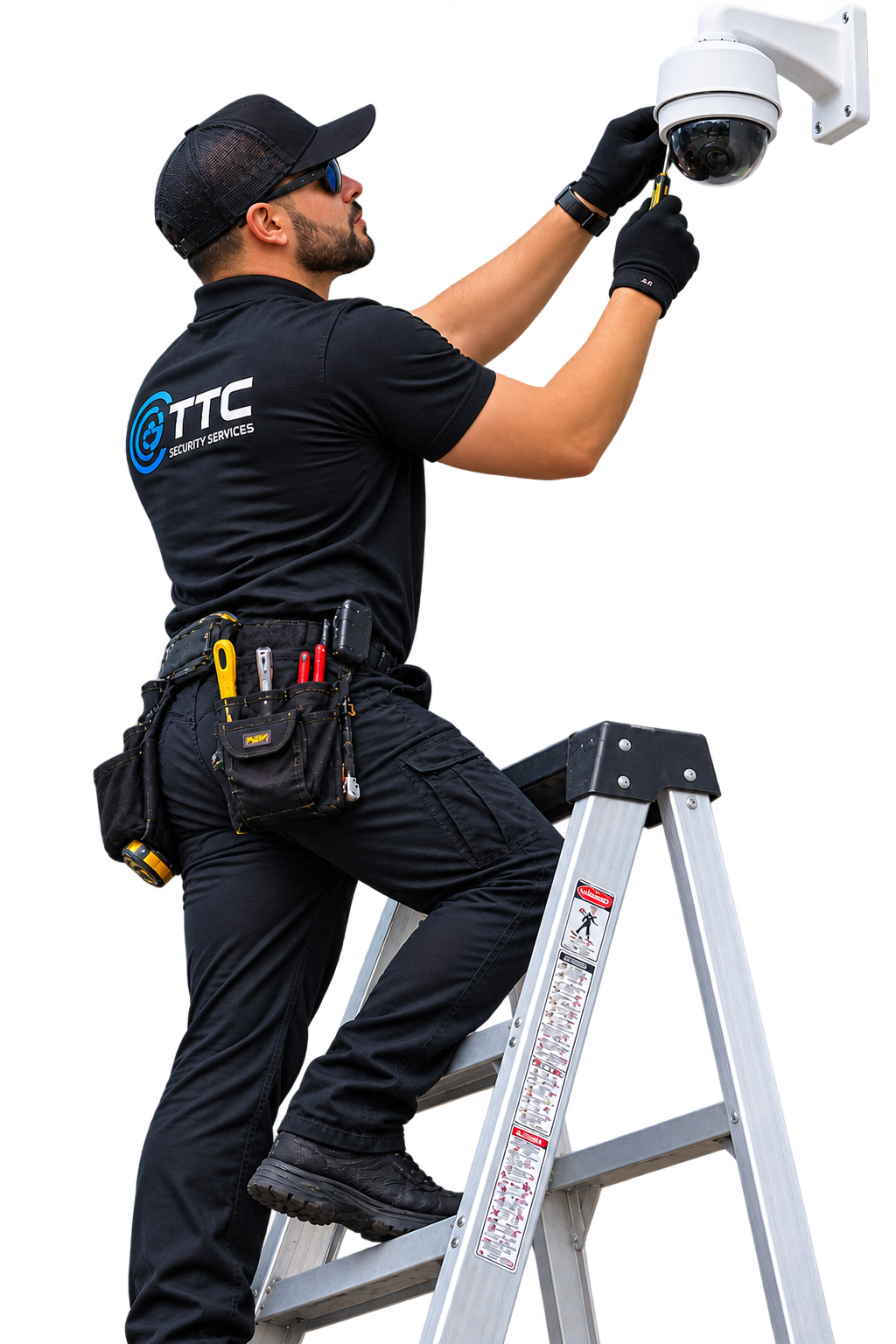
Before any camera goes up, we walk the property, map the blind spots, and figure out exactly where a trailer or drone gives you real coverage, not just a camera pointed at a fence.

Fast Install, No Downtime
02
We handle delivery and setup wherever your project sits in Texas, so your timeline doesn’t slip waiting on us.

Watch It Live From Anywhere
Live and recorded footage lands on your phone, tablet, or laptop the same day, not after someone files a report.
03

We Don't Disappear After Setup
Projects change. Sites expand. Our team stays available to adjust coverage as your job evolves, wherever in Texas it’s happening.
04
The Trial Is Free. The Theft Isn't.
Every week your site sits unmonitored is another week someone could be scouting it. See how our security cameras hold up on your actual job site, wherever it is in Texas, before you commit to anything. Every setup includes free delivery, professional installation, and a complimentary 2-week trial.


Ready to Protect Your Site?
Whether you’re running one job site or a dozen, TTC Security Services delivers reliable 24/7 remote video monitoring with fast, no-infrastructure mobile surveillance to contractors and businesses across Texas, including Dallas, Houston, Austin, San Antonio, and every job site in between. Reach out today and we’ll build a security plan around your project, timeline, and budget.
Frequently Asked Questions
Mobile cameras cover a fixed area continuously, ideal for equipment yards and site entrances. Drones add aerial sweeps with thermal and night vision, catching movement across large sites, pipeline corridors, and property lines that ground cameras can't reach. Most Texas sites benefit from using both together.
Our monitoring team, backed by over 30 years of combined law enforcement experience, reviews the activity in real time and responds according to your site's protocol, whether that's triggering an audio warning, alerting on-site personnel, or contacting local authorities.
Yes. Many of our clients run projects across Dallas-Fort Worth, Houston, Austin, and San Antonio at the same time. We coordinate deployment and monitoring across all locations from one point of contact.
There's no obligation to continue. If the coverage worked for your site, we'll set up an ongoing plan based on your project timeline. If it didn't fit your needs, you walk away with no cost and no pressure.
Our units are built for exactly that scenario, common on pipeline routes and oilfield sites, using solar power and reliable connectivity options designed for locations far from typical infrastructure.
Most companies drop off a camera and leave you to watch the footage yourself. TTC pairs the hardware with an actual monitoring team that has law enforcement experience, so someone is watching and responding, not just recording.